
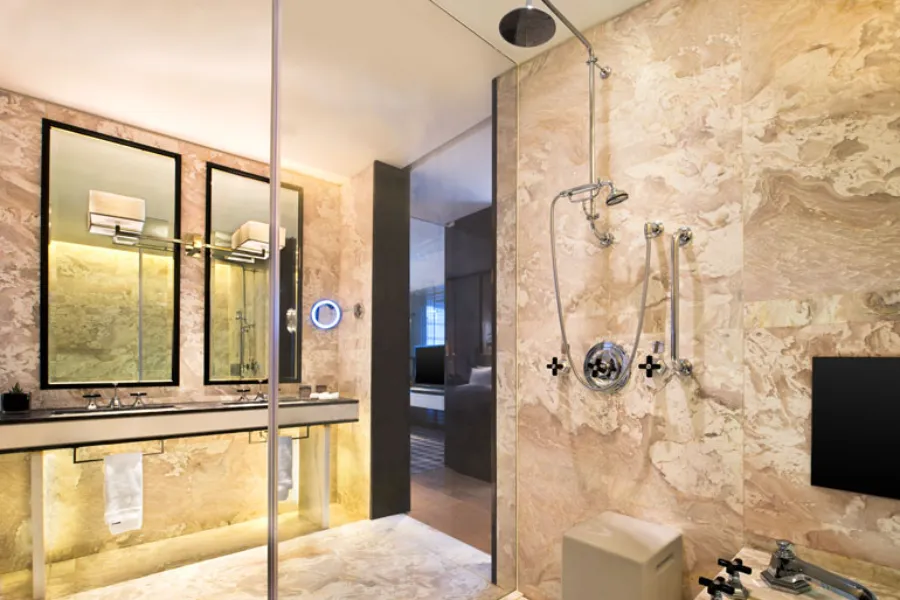
Specifying shower enclosures for a hotel project is not the same as buying for a residential bathroom. A single wrong decision on glass thickness, hardware finish, or door configuration can multiply across 200 guestrooms and turn into five-figure maintenance costs within the first year. This guide walks through the decisions that matter most for hotel developers, procurement managers, and project contractors.
Start With the Room Type and Guest Profile
Before comparing products, map the enclosure to the room category. A standard king room in a business hotel has very different requirements from a resort suite or an accessible (ADA) room.
- Standard guestrooms: compact layouts, high turnover, need durable sliding or pivot doors with minimal floor obstructions.
- Suites and premium rooms: frameless hinged enclosures with 10mm glass deliver the visual impact guests photograph and review.
- Accessible rooms: walk-in or roll-in configurations with wide openings, low or zero thresholds, and reinforced grab-bar mounting zones.
Procurement teams that standardize on one enclosure type across all room categories usually pay for it twice: once in over-spec for standard rooms, and again in complaints from premium room guests.
Glass Thickness and Safety Standards
For hospitality use, tempered (toughened) safety glass is non-negotiable. The question is thickness and certification.
Common thickness options
- 6mm: acceptable only for framed or semi-frameless sliding doors in budget segments.
- 8mm: the workhorse for mid-scale hotels, suitable for semi-frameless pivot and sliding systems.
- 10mm: the standard for frameless enclosures in four-star and above properties.
Always confirm the glass meets the destination market’s standard: ANSI Z97.1 and CPSC 16 CFR 1201 for the United States, EN 12150 and EN 14428 for Europe. Ask your supplier for test certificates per batch, not just a generic product certificate.
Door Configuration: Sliding vs Hinged vs Walk-In
The door mechanism drives both the guest experience and the housekeeping workload. The table below compares the three most common configurations for hotel projects.
| Configuration | Best For | Pros | Watch Out For |
|---|---|---|---|
| Sliding (bypass) | Compact standard rooms | No swing clearance needed, space efficient | Track cleaning, roller wear after 3-5 years |
| Hinged / pivot | Suites, premium rooms | Premium look, wide opening, fewer moving parts | Needs swing space, hinge quality is critical |
| Walk-in (fixed panel) | Resorts, accessible rooms | Zero moving parts, easiest maintenance, modern look | Requires larger footprint, splash zone planning |
Hardware Finish and Corrosion Resistance
Hotel bathrooms are high-humidity environments cleaned daily with chemicals. Hardware finish failures are the number one aesthetic complaint in year two and three.
- Chrome plated brass: the safest default; insist on 304 or 316 stainless for coastal properties.
- Matte black and brushed gold: popular in design-led hotels, but verify PVD coating rather than powder coating for longevity.
- Salt spray testing: request 48-hour minimum neutral salt spray test reports for any finish you specify.
Easy-Clean Glass Coating
A factory-applied hydrophobic coating (often branded as easy-clean or nano coating) reduces housekeeping time per room by two to four minutes. Across a 300-room property, that is a measurable labor saving every single day. Confirm the coating is applied in the factory before tempering or via a validated post-temper process, and ask for the expected service life in writing.
Logistics, Packaging, and Installation Support
For overseas hotel projects, the enclosure is only half the product. The other half is getting 500 sets to site intact and installed correctly.
- Require export-grade packaging: honeycomb cartons, corner protectors, and wooden crates for frameless panels.
- Ask for numbered installation drawings per room type so local contractors can work without factory supervision.
- Order 3 to 5 percent spare hardware and at least 2 percent spare glass panels for attick stock.
Frequently Asked Questions
What glass thickness is best for hotel shower enclosures?
For mid-scale hotels, 8mm tempered glass in a semi-frameless system offers the best balance of cost and durability. Four-star and luxury properties should specify 10mm for frameless designs.
How do I verify a supplier can handle a 300-room project?
Ask for references from completed hospitality projects of similar scale, a factory audit report, and a pre-production sample approved against your specification before mass production begins.
Should hotel shower enclosures have easy-clean coating?
Yes. The coating typically adds 5 to 8 percent to unit cost but pays back in reduced housekeeping labor and fewer glass replacement cycles caused by mineral etching.
What certifications should I request for a US hotel project?
Request ANSI Z97.1 and CPSC 16 CFR 1201 Category II compliance for the tempered glass, plus SGCC certification where available. For hardware, ask for material certificates on stainless steel grades.
Conclusion
Choosing shower enclosures for hotel projects comes down to matching the configuration to the room type, specifying certified tempered glass at the right thickness, insisting on corrosion-resistant hardware, and planning logistics before the purchase order is signed. Work with a manufacturer that has verifiable hotel project experience, and lock every detail in a written specification sheet before production.