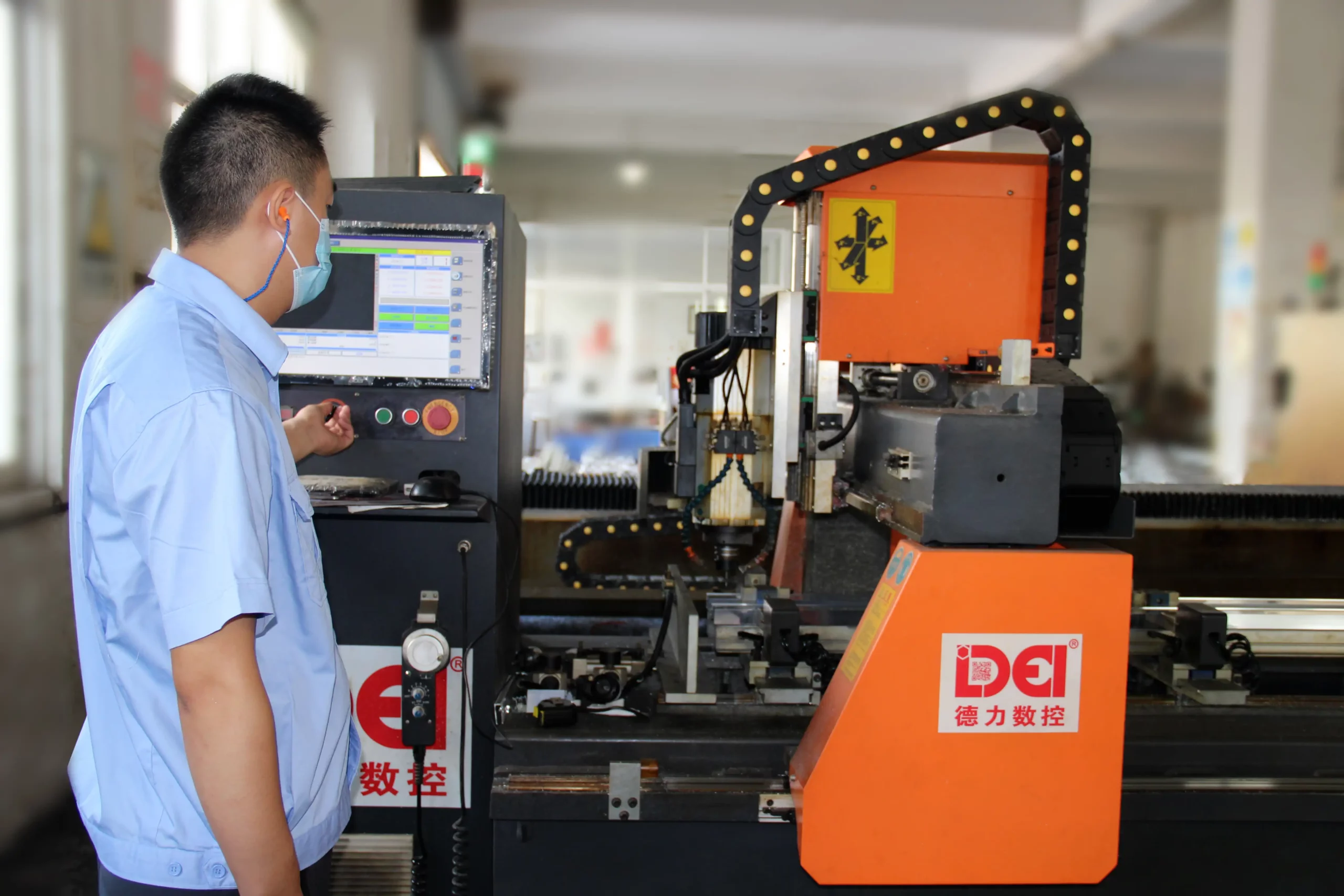
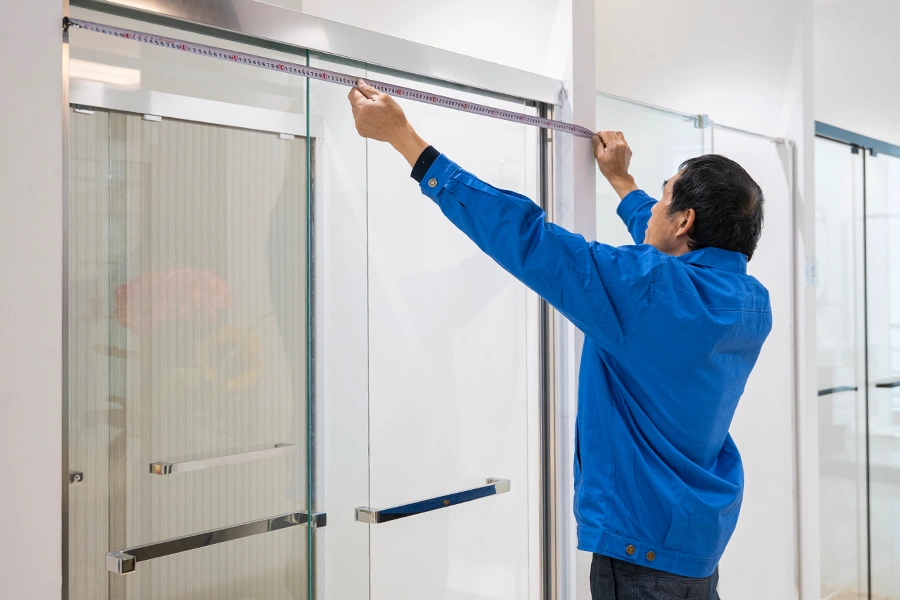
Aluminum material preparation
Aluminum profiles are received, checked against the approved specification, and staged for the order batch before any cutting begins.
From Xinyi glass raw sheets to container loading, every order moves through 10 documented steps and four in-house workshops. This is “factory-visit content” you can read before you commit: see how material, assembly, inspection, packing, and shipment are controlled inside our 15,000㎡ Foshan factory.
“Knowing how each batch moved through the line kept our delivery on schedule.” — Kevin, Project Buyer
Every batch follows the same 10-step sequence. Each step lists what happens on the floor and the quality-control checkpoint that gates it — the level of detail buyers normally need a factory visit to confirm.
Aluminum profiles are received, checked against the approved specification, and staged for the order batch before any cutting begins.
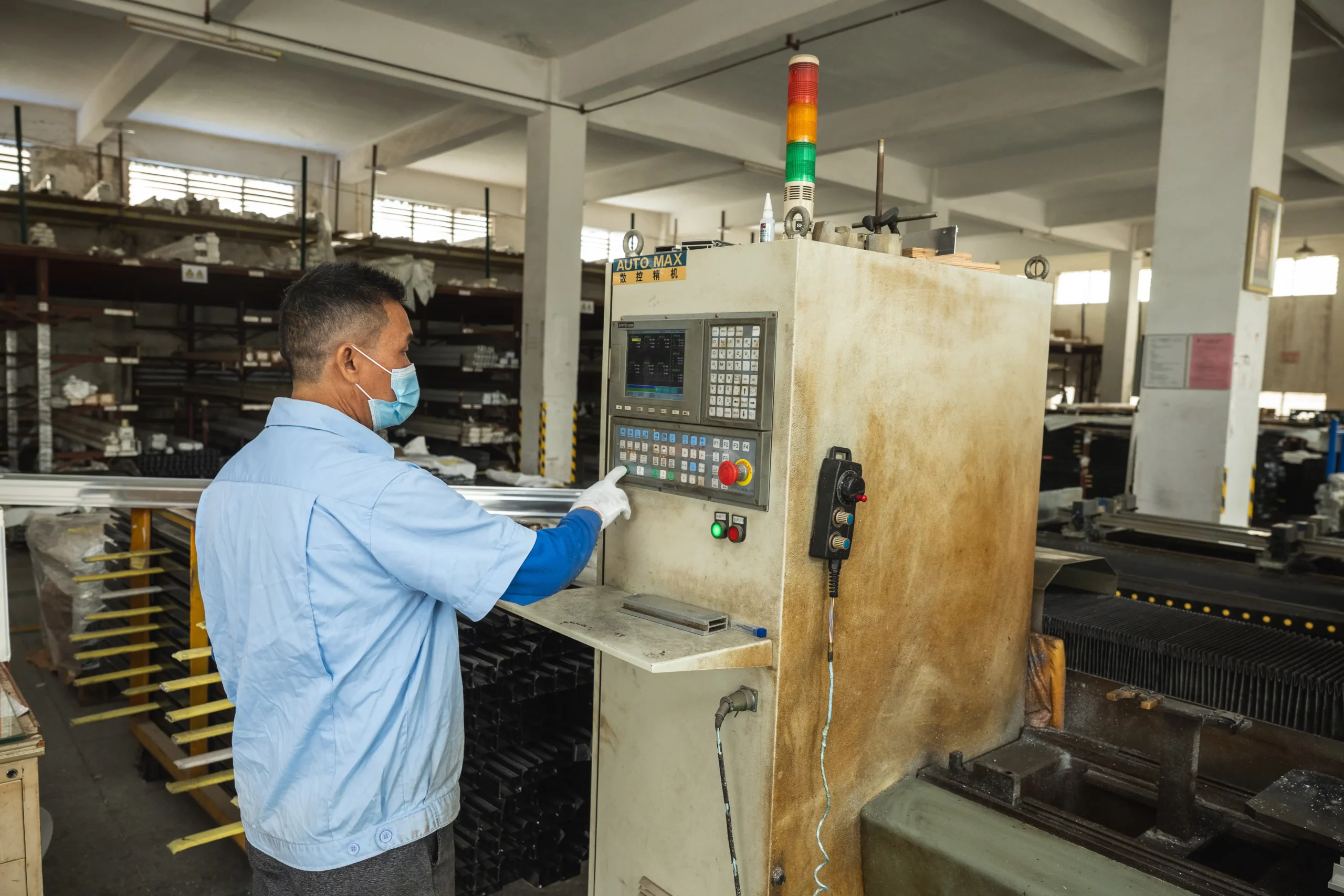
Profiles are cut to length on the CNC double-head cutting saw, so repeated dimensions stay consistent across the whole batch.
Cut profiles are grooved on automated equipment so glass channels and fitting seats are positioned ready for assembly.
Profiles and hardware are pre-assembled into frame sub-structures before they meet the glass.
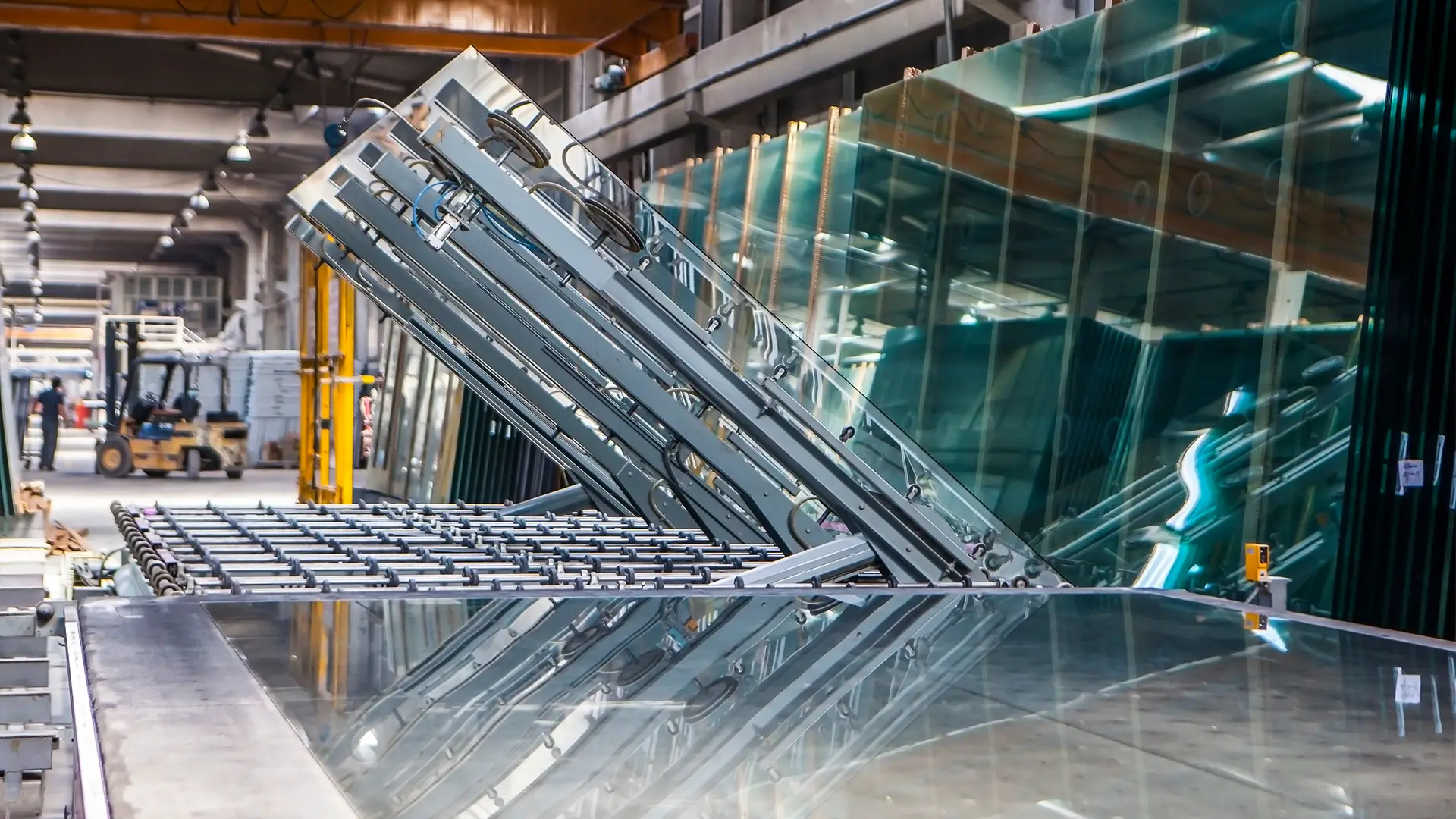
Glass is processed in-house from Xinyi (信义) glass raw sheets, cut and prepared to the order’s confirmed dimensions and configuration.
Processed glass is inspected after tempering, including the tempered-glass safety check that confirms it breaks safely.
Assembled doors undergo functional and structural testing before they are allowed to move to packing.
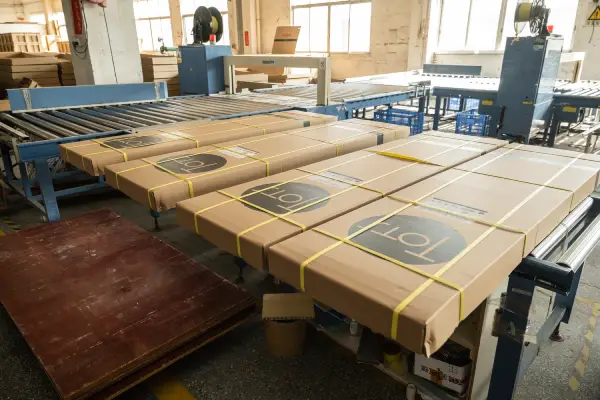
Finished units are packed in standardized honeycomb cartons with reinforced wooden crates, cushioning and separation matched to transport risk.
Packed orders are staged and sorted in the warehouse according to the buyer’s delivery logic before loading.
Verified, sorted cartons are loaded into containers in a sequence that preserves the buyer’s unloading and installation order.
The 10 steps run across four dedicated workshops inside the same 15,000㎡ facility. Critical decisions about glass, aluminum, assembly, and packaging are never outsourced — including processing Xinyi glass raw sheets ourselves instead of buying finished glass.
Profile preparation, CNC cutting, grooving, and drilling for frames and hardware mounting — the dimensional foundation of every door.
Xinyi glass raw sheets are cut, edged, drilled, and tempered in-house, keeping safety-glass quality and material origin under our control.
Glass, profiles, and hardware are assembled into finished units against approved specifications, with functional checks before packing.
Standardized honeycomb cartons and reinforced wooden crates run on an automated line, sorted and labeled to the buyer’s delivery logic.
Since our 2011 capacity upgrade, the line has been built around dedicated CNC and automated equipment. The point is not impressive machine names — it is that repeated dimensions, holes, and packaging stay consistent across a 1,000-set month.
Cuts aluminum profiles to length and angle so repeated dimensions stay batch-consistent from the first unit to the last.
Handles precision machining of profiles and fitting seats for tight, repeatable tolerances on hardware mounting.
Drills multiple holes in one pass, keeping hardware mounting positions consistent across the whole batch.
Standardizes carton forming and packing so protection and labeling stay uniform across orders.
The four-workshop layout supports 1,000 sets per month with flexible production, so project orders and channel orders run side by side without one blocking the other. Full-chain control shows up in three concrete places on every order.
Because aluminum, glass, assembly, and packaging are produced in-house — including processing Xinyi glass raw sheets ourselves — the order is not stacked with separate supplier margins at each handoff.
One team controls the whole sequence, so lead times stay dependable: samples in 15 days, first mass order in 30 days, and repeat orders in 20–25 days — without waiting on outside processors.
In-house control keeps standards uniform: ISO 9001 / 14001 / 45001 systems, SGCC and CE certification, and hardware salt-spray testing to 96h (standard) or 240h (coastal) for repeat-batch consistency.
Six questions buyers ask most often about the manufacturing process – covering process stability, full-chain control, glass verification, flexibility, and how it differs from Quality Control. Tap a question to read our standard answer.
For importers and distributorsBecause process stability affects consistency, lead-time predictability, packing readiness, and how repeatable the finished product will be across batches.
For sourcing teamsNo. A useful process page should show preparation, assembly, functional review, packing, and shipment coordination instead of trying to impress buyers with equipment names alone.
For project buyersManufacturing explains how the order moves through production. Quality Control explains how risks are checked, escalated, and stopped before they become shipment problems.
For brand owners and importersIt means aluminum processing, glass deep-processing, assembly, and packaging all happen in-house, and we process Xinyi glass raw sheets ourselves. Nothing critical is outsourced, which keeps cost, lead time, and quality stable across every batch.
For engineering and compliance teamsGlass is cut and tempered in-house from Xinyi raw sheets, then verified against ANSI Z97.1 (US), EN 12150 (Europe), and AS/NZS 2208 (Australia). Each order ships with a QC report covering tempering, impact, and salt-spray data.
For e-commerce sellers and project buyersYes. Monthly capacity is 1,000 sets with flexible production, and MOQ starts at 10 sets for main models. Packaging can be sorted by room, zone, or SKU to match your delivery logic.