
Fixed Benchmarks
96h standard, 240h coastal
Every finish is validated against the same two grades: 96 hours of continuous salt fog for standard hotel-grade hardware, 240 hours for coastal and marine specifications.
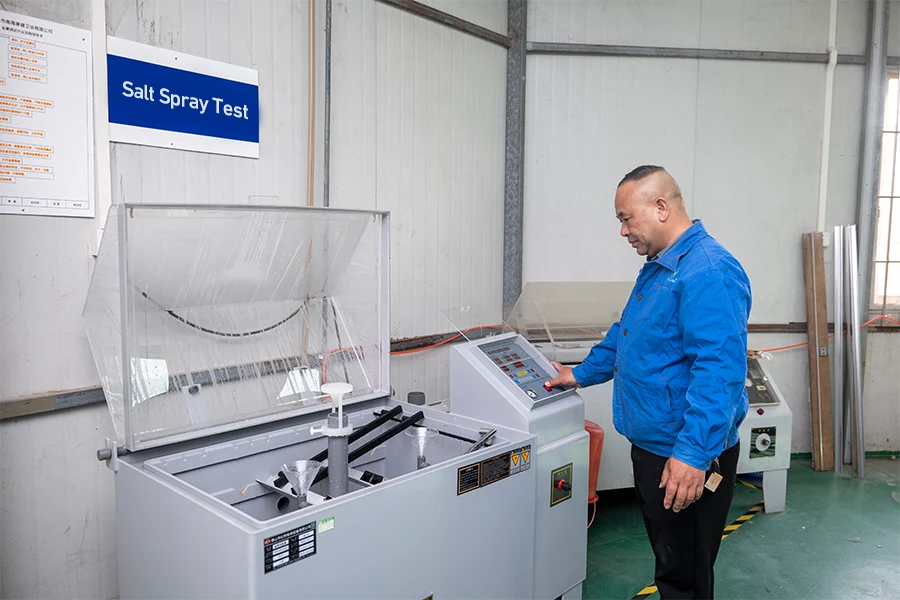
A salt spray test compresses years of steam, cleaning chemicals, and coastal salt air into days of controlled exposure: hardware sits in a continuous 5% sodium chloride fog at 35°C under ISO 9227 / ASTM B117. This guide explains what the 96-hour standard grade and 240-hour coastal grade really mean, how KJbath tests every hinge, handle, and profile before production, and how to specify corrosion-resistant hardware for hotel, coastal, and wholesale projects.
“The 96-hour salt-spray data let us sign off on hinges with zero site failures.” — Marcus, Hotel Procurement Lead
A salt spray rating is only meaningful when it is tied to a named method and a traceable report. These are the governing standards and certifications behind our hardware and glass programs.
Corrosion tests in artificial atmospheres — salt spray tests (NSS).
Standard practice for operating salt spray (fog) apparatus.
Safety Glazing Certification Council — North American safety glass.
European conformity — EN 14428 shower enclosure system.
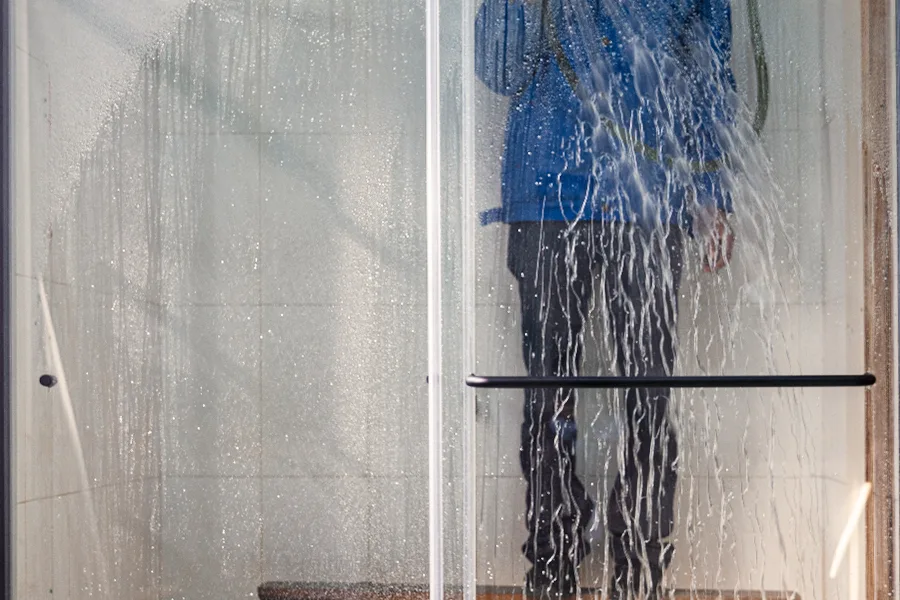
Ask any project buyer what they fear most in shower hardware, and the answer is rarely price. It is a hinge that pits within a year, a handle that blisters, a profile edge that shows red rust — usually first in the rooms that matter most.
Shower hardware works in one of the harshest micro-environments in any building: every shower cycle loads hinges, handles, rollers, and profiles with hot water vapor, soap residue, and chloride from tap water, followed by daily cleaning with acidic or alkaline detergents. A finish that looked perfect in the showroom can start pitting within 12 to 18 months.

Corrosion resistance cannot be judged from a showroom sample — it has to be measured before production. At KJbath, every new hinge, handle, and profile finish goes through our in-house salt spray chamber before it is approved for production, and running batches are re-tested to catch plating drift from upstream suppliers. The benchmark is fixed: 96 hours for standard hotel-grade hardware, 240 hours for coastal project specifications. When a sample shows early pitting, the batch does not ship; the finish goes back to the plating line and the root cause is corrected before production resumes.
Every finish is validated against the same two grades: 96 hours of continuous salt fog for standard hotel-grade hardware, 240 hours for coastal and marine specifications.
We test fully machined hinges and handles — with drilled holes, threads, and cut edges — because hardware rarely fails on a flat surface. It fails where plating is thinnest.
Running batches are re-tested to catch plating drift, and any batch with early pitting is held. Every order ships with a QC report of salt-spray data plus SGCC/CE certificate copies.
The salt spray test, also called salt fog testing, is an accelerated corrosion method defined by two governing standards: ISO 9227 and ASTM B117.
Hardware samples are placed in a sealed chamber and exposed to a continuous fog of 5% sodium chloride (NaCl) solution at 35 degrees Celsius, with the solution pH held between 6.5 and 7.2 — the neutral salt spray (NSS) method.
The test does not simulate one specific bathroom. It compresses years of corrosive exposure into days, giving engineers a controlled way to compare materials, plating thickness, and surface treatments on an equal basis. When the chamber door opens, inspectors check for white corrosion products, red rust, blistering, and pitting against an acceptance standard agreed before the test started.
At KJbath, every hardware specification maps to one of two internal salt-spray grades. The difference is not just time in the chamber — it changes the base material, the coating system, and even the fasteners you specify.
96 hours is the standard grade for hotel and apartment projects; 240 hours is the coastal grade reserved for seaside resorts, island properties, and other salt-heavy environments.
| Attribute | 96h Standard Grade | 240h Coastal Grade |
|---|---|---|
| Chamber exposure | 96 hours of continuous 5% NaCl fog at 35°C | 240 hours of continuous 5% NaCl fog at 35°C |
| Target environment | Inland hotels, apartments, gyms, high-humidity commercial bathrooms | Coastal resorts, seaside spas, island and marine environments |
| Typical hardware level | 304 stainless steel, multi-layer plating | 316 stainless steel or PVD-coated 304 |
| Expected result at end of test | Minor surface staining, no red rust | Negligible visible change |
| Fasteners | Standard-grade screws and pins, tested with the assembly | Coastal-grade screws and pins — the parts that corrode first in salt air |
| KJbath application | Standard hotel-grade hardware benchmark | Coastal and marine project specification |
Suppliers often quote a single number: our hardware passes 96 hours. The number only makes sense when you know what failure looks like at each level and which level your project actually needs. Based on what we see in our own chamber, the market breaks down into four practical tiers.
| Salt Spray Rating | Typical Hardware Level | Common Failure Point | Recommended Application |
|---|---|---|---|
| 24 hours | Zinc alloy with thin chrome | Pitting at edges and screw holes | Dry-area accessories only, not shower zones |
| 48 hours | Standard chrome-plated brass or aluminum | Blisters near drilled holes and welds | Residential bathrooms with normal ventilation |
| 96 hours | 304 stainless steel, multi-layer plating | Minor surface staining, no red rust | Hotels, gyms, high-humidity commercial projects |
| 240 hours and above | 316 stainless steel or PVD-coated 304 | Negligible visible change | Coastal resorts, seaside spas, marine environments |
A 96-hour claim is only credible if the supplier can show the test report, the acceptance criteria, and photos of the samples after the test. A number without a report is a sales line, not a specification.
The two dominant materials for quality shower hardware behave very differently once the chamber fog starts. Understanding the difference helps you match material to project risk instead of paying for the wrong kind of durability.
Grade 304 stainless contains roughly 18% chromium and 8% nickel, which form a self-repairing passive oxide layer on the surface. If the surface is scratched, the layer rebuilds itself in the presence of oxygen. There is no coating to peel, so corrosion protection does not depend on plating thickness or plating quality control.
Brass hardware depends entirely on its plating stack, usually copper, then nickel, then a decorative chrome top layer. Protection is excellent while the plating is intact, but every drilled hole, thread, and polished edge is a thin point. Once a pinhole reaches the brass substrate, galvanic corrosion spreads under the chrome and shows up as blistering.
| Factor | 304 Stainless Steel | Chrome-Plated Brass |
|---|---|---|
| Corrosion mechanism | Self-healing passive layer | Barrier plating, fails at pinholes |
| Typical salt spray result | 96 hours with no red rust | 48 to 72 hours depending on plating thickness |
| Weight and strength | High strength, ideal for heavy frameless doors | Lower strength, suited to hinges and handles |
| Finish options | Brushed, polished, PVD colors | Chrome, brushed nickel, matte black |
| Relative cost | Higher material cost, stable long term | Lower initial cost, higher replacement risk |
Project buyers increasingly want finishes beyond chrome — matte black, brushed gold, gunmetal — while keeping the salt-spray rating. That is exactly what our corrosion-resistant PVD coating delivers.
PVD (Physical Vapor Deposition) builds the finish layer by layer in a vacuum, producing a dense, uniform coating over a 304 stainless steel substrate, without depending on the plating stack where pinholes and thin edges start galvanic corrosion.
For brand owners and importers, this means a private-label finish does not have to mean a corrosion risk: the same 96h or 240h benchmark applies, with the chamber report to prove it.
The right specification is the one that matches the chloride load and maintenance reality of the project. Over-specifying wastes budget; under-specifying guarantees claims.
KJbath has manufactured shower enclosures since 1999, and hardware corrosion testing has been part of our quality routine for most of that history.
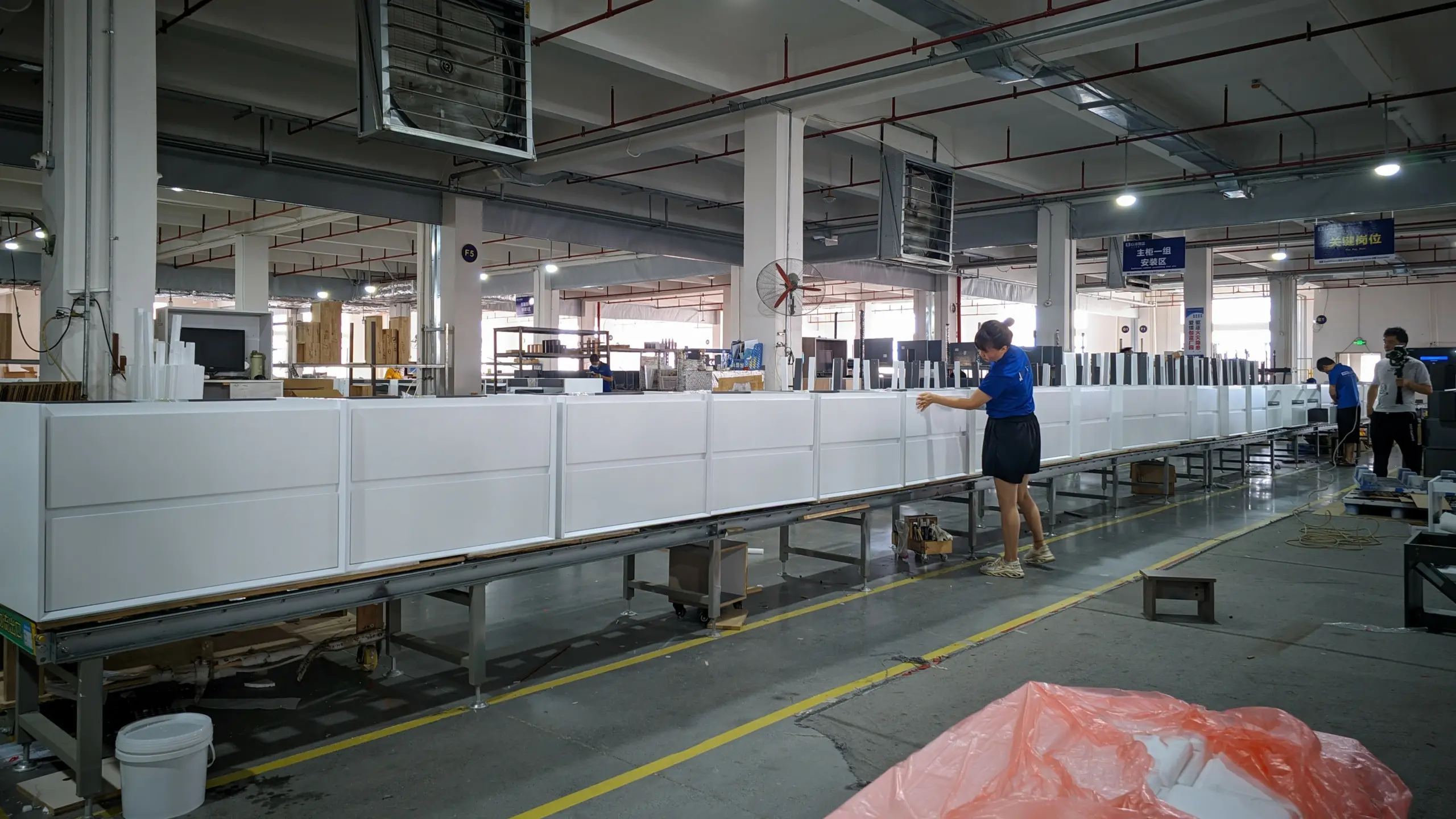
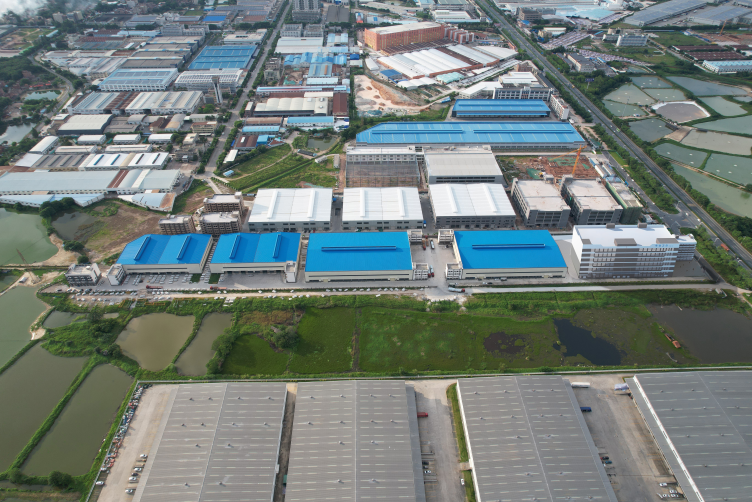
In the lab at our 15,000 m² factory in Foshan, every new hinge, handle, and profile finish goes through the chamber before it is approved for production, and we re-test running batches to catch plating drift from upstream suppliers.
Our internal benchmark is 96 hours for standard hotel-grade hardware, with 240 hours reserved for coastal project specifications. When a sample shows early pitting, the batch does not ship. The finish goes back to the plating line, and the root cause, usually nickel thickness or pre-treatment cleaning, is corrected before production resumes.
After more than two decades of testing, one pattern never changes: hardware rarely fails in the middle of a flat surface. It fails at drilled holes, cut edges, threads, and welds, exactly where plating is thinnest. That is why we test finished, machined parts, not polished test coupons.
This factory-first approach costs us some batches every year. It also means the hardware that reaches a hotel project has already survived the equivalent of years in a steam room before it is installed.
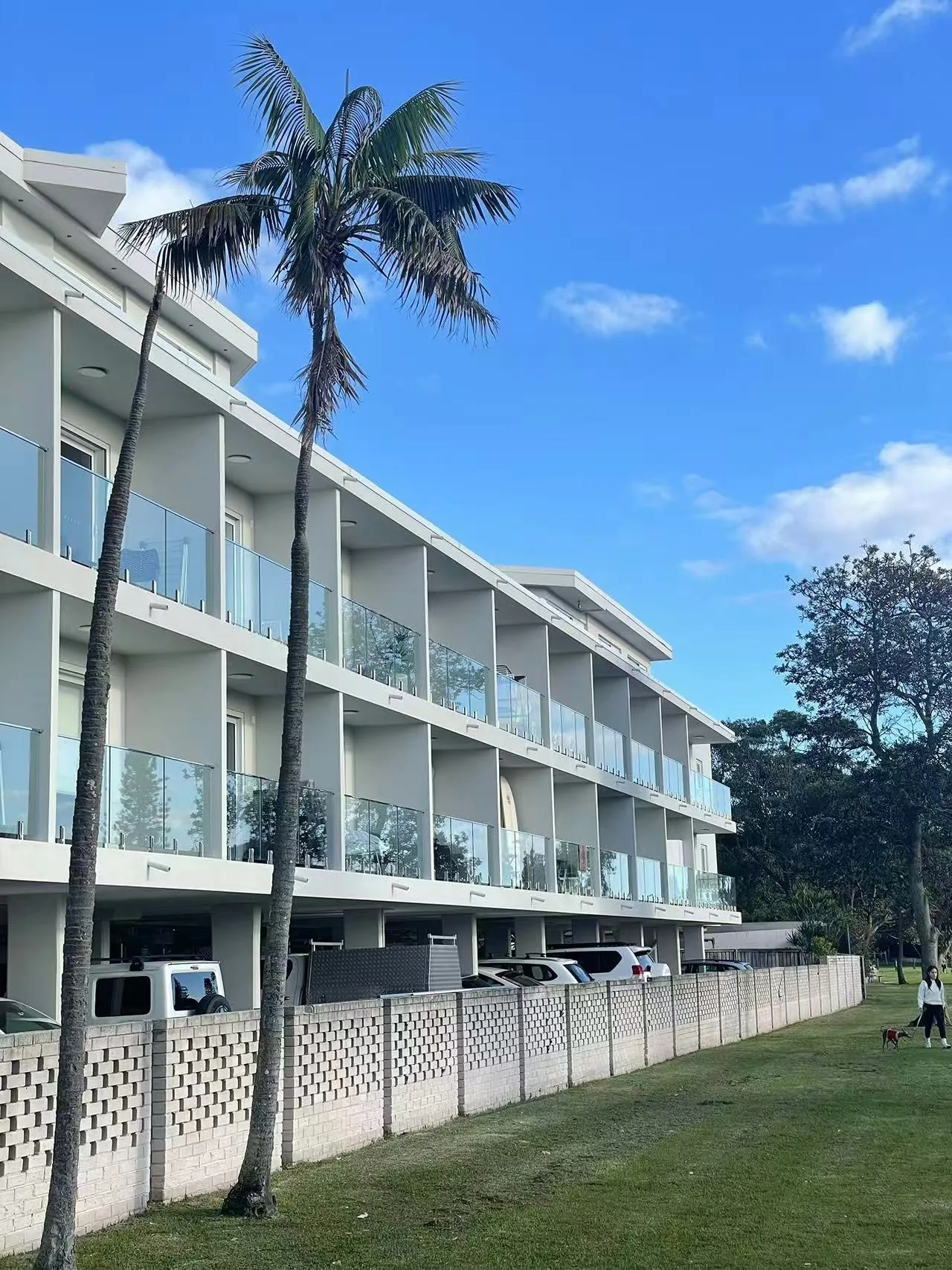
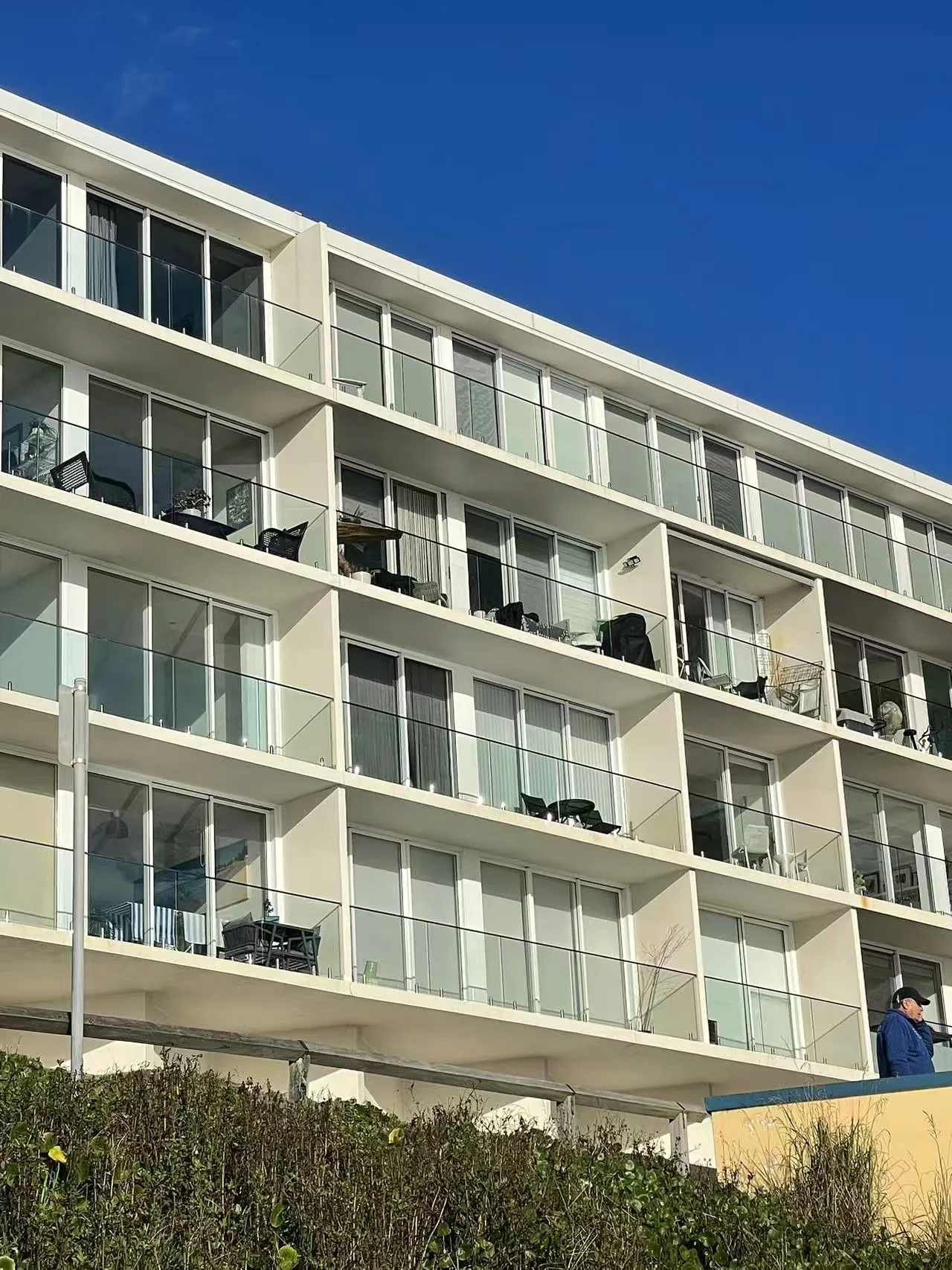
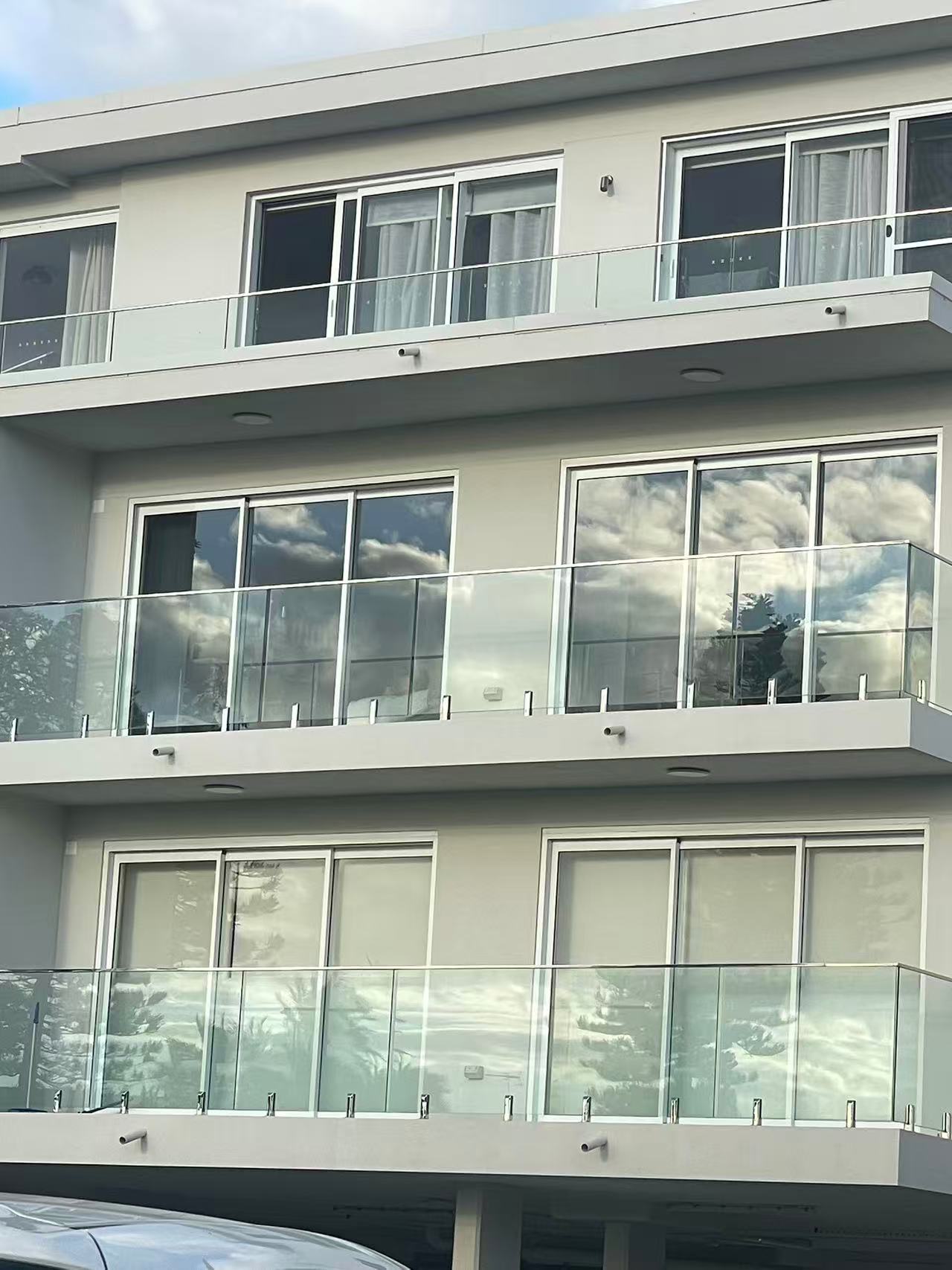
In 2025, the same coastal-grade engineering was applied to Waterview Beach Apartment in Dee Why, New South Wales — a seaside building exposed to permanent high humidity, salt-heavy sea air, and strong sea wind.
Our salt-spray system reaches well beyond the hotel bathroom. Where ordinary metal fittings quickly rust, peel, and loosen, this project specified coastal-grade engineering from the start.
“Health clearly understood what our seaside apartment project really worried about — safety, durability, and the ocean view together.” — Ethan Clarke, Waterview Beach Apartment
Read the full project: Waterview Beach Apartment case study.
Last updated: July 2026.
Whether you buy from KJbath or anyone else, these five questions separate real corrosion resistance from brochure language.
If you are sourcing shower enclosures for hotel, resort, or wholesale programs, send us your project environment details and we will recommend a hardware specification and finish matched to your corrosion risk, with test documentation available on request.
Six questions our buyers ask most often – covering test standards, hour ratings, material choice, coastal specifications, custom PVD finishes, and test documentation. Tap a question to read our standard answer.
For quality inspectorsIt proves the finish survived 96 hours of continuous 5% salt fog at 35°C without the agreed failure signs, usually red rust or blistering. It is a comparative benchmark for corrosion resistance, not a direct promise of service years in a real bathroom.
For project buyersFor corrosion resistance and strength with heavy frameless glass, yes. Chrome-plated brass still makes sense for decorative handles and lower-load parts when plating quality is controlled, and it offers finish options like polished chrome that stainless cannot replicate.
For hotel developersTreat 96 hours as the minimum and specify 240 hours with 316 stainless or PVD-coated 304 hardware for properties near the sea. Include screws and fasteners in the specification, because they corrode first in salt-heavy air.
For brand ownersYes. PVD coatings over 304 stainless deliver colors like matte black, brushed gold, and gunmetal while maintaining or improving salt spray performance. We re-test every custom finish in our chamber before approving it for OEM production.
For distributorsThe usual causes are nickel plating below specification, poor pre-treatment cleaning, or zinc alloy substituted for brass. Ask for the salt spray report on the actual shipped parts. If none exists, the corrosion risk was never controlled.
For importersRequest the chamber report for the actual shipped parts: the standard used (ISO 9227 or ASTM B117), the exposure duration (96h or 240h), and post-test sample photos. Every KJbath order ships with a QC report covering tempering, impact, and salt-spray data, plus SGCC/CE certificate copies.